Sexual harassment prevention training: every employee receives it in their own language, and there is a signed acknowledgement for each one
The law requires the employer to take reasonable measures to prevent sexual harassment and retaliation, and the regulations require that the prohibition, the employer's obligations and the details of the person in charge of complaints be brought to the attention of every employee. Here is how to get this to all your employees — including those who do not read Hebrew — and keep records.
Written by Roman Bok, certified safety officer and certified work-at-height instructor · Updated: October 2026
What the law and the regulations require of the employer
Reasonable measures and a way to complain
An employer must take reasonable measures to prevent sexual harassment and retaliation in the course of work relations, set an effective way of submitting a complaint and investigating it, and deal effectively with every case that comes to its knowledge (section 7(a) of the law).
Informing every employee
The employer brings the prohibition on sexual harassment and retaliation to the attention of every employee and every supervisor, explains its obligations as an employer to them, and requires them to refrain from harassment and retaliation (regulation 2(a)).
Code of conduct
An employer of more than 25 employees adopts a code of conduct (bylaws) setting out the main provisions of the law and the ways of submitting and handling a complaint, and publishes it among its employees (section 7(b) of the law). In adapting the code to the organisation, the employees' language is also taken into account (regulation 8(1)).
Person in charge of complaints
The employer appoints a person in charge of complaints — a woman, where possible — and informs every employee of that person's name and of the details needed to contact them (regulation 4).
Source: the Prevention of Sexual Harassment Law, 1998, section 7; the Prevention of Sexual Harassment (Employer Obligations) Regulations, 1998, regulations 2, 4 and 8.
And what the law does not say
To build the training properly, it is important to know what the law and the regulations do not say, too.
For an ordinary employer, the law and the regulations set no fixed training frequency, duration, exam or certificate. A bill for mandatory annual training was tabled in the Knesset in 2023 and was not enacted.
The employer must allow employees to take part, during working hours, in training and awareness activities organised by a representative employees' organisation or by an organisation for the promotion of equality at work — unless the employer organises such activities itself (regulation 2(d)).
Institutions that provide academic or vocational education to adults have an explicit duty: training and awareness activities at least once a year, which may be carried out through a computerised e-learning course (regulation 9(a1)). A similar rule applies to sports bodies.
Training does not replace the other obligations: a person in charge of complaints, an effective way of submitting a complaint, a code of conduct and dealing with every case.
In plain terms: documented training is a practical way to bring the prohibition, the code of conduct and the details of the person in charge of complaints to the attention of every employee, and to show that this was done — part of the employer's obligations, not all of them.
How the training works
1
A programme for your organisation
The training is adapted to the organisation: the prohibition in the law, the code of conduct, and the details of the person in charge whom employees contact.
2
Personal link
Each employee receives a link by email, SMS or WhatsApp, or gets in through the company's web address — with no password.
3
In the employee's language
The employee chooses a language from the training's languages that the company enables, and receives the same content.
4
A full e-learning course
Narrated slides, questions and practice games, ending with the contact details of the person in charge of complaints.
5
Acknowledgement and signature
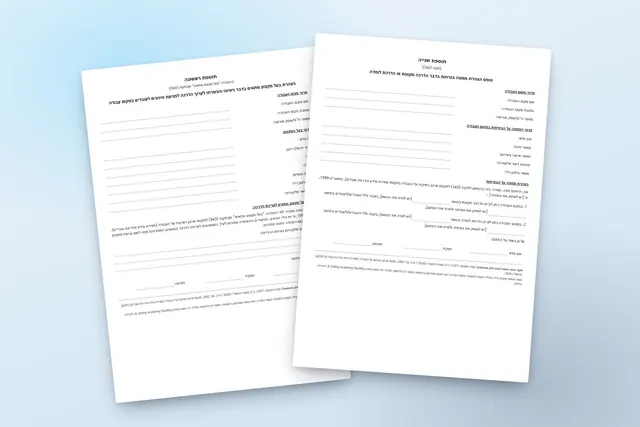
The employee acknowledges the training and the contact details they received, and signs.
6
Records
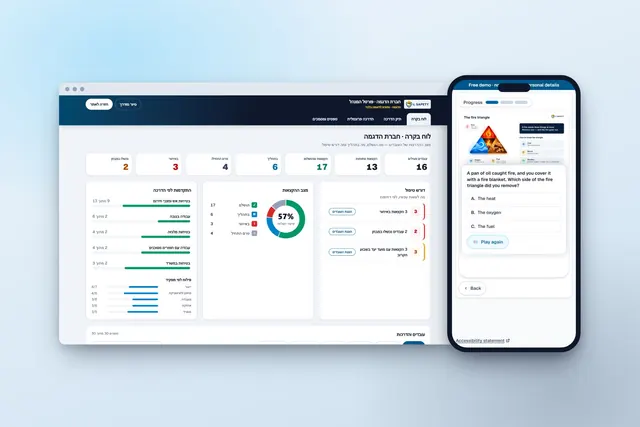
The signed acknowledgement is kept for every employee, the employee can download a copy, and the manager sees who has completed.
What is kept and what the manager sees
Who has completed, who is in progress and who has not started — for every employee.
A one-page personal record for each employee: the wording they acknowledged, the details of the person in charge of complaints, the date and the signature.
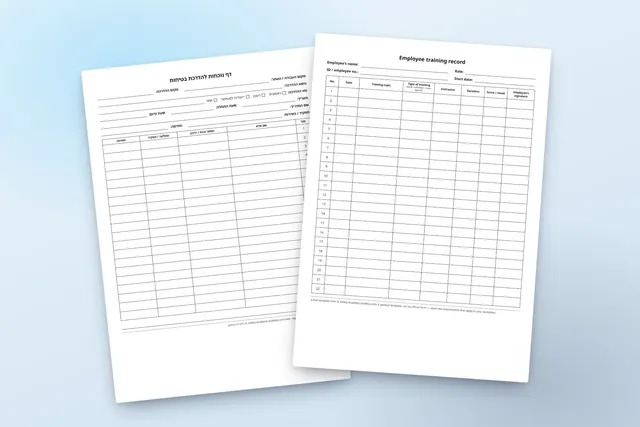
A monthly signature summary form, to download and print.
Sending a reminder to employees who have not yet completed.
Also for employees who do not read Hebrew
Training the employee does not understand explains nothing to them. The ready-made sexual harassment prevention training exists in Hebrew, English, Russian, German, Spanish, Arabic and Amharic, and every employee receives the same content and the same contact details in the language they chose. The Arabic and Amharic versions are still awaiting review by a native speaker.
Frequently asked questions
Does every employer have to train its employees?
The law requires every employer to take reasonable measures to prevent sexual harassment and retaliation, and the regulations require that the prohibition, the employer's obligations and the details of the person in charge of complaints be brought to the attention of every employee and every supervisor. For an ordinary employer the law sets no particular frequency or form of training; documented training is a practical way to do this and to show that it was done.
What must an employer of more than 25 employees do?
Adopt a code of conduct (bylaws) setting out the main provisions of the law and the ways of submitting and handling a complaint, and publish it among the employees (section 7(b) of the law). An employer that has not published such a code commits an offence punishable by a fine (section 8 of the law).
Who should take the training?
The regulations speak of every employee and every supervisor. It is worth assigning the training to every new employee as part of onboarding, and repeating it from time to time.
Can the training be adapted to our organisation?
Yes. The training includes the details of your organisation's person in charge of complaints and the ways to contact them, and we can add the company's code of conduct and further content, and prepare a version for each country and language in which your employees work.
Is digital training enough?
For an ordinary employer the law sets no particular form of training, and nothing official addresses whether an e-learning course fulfils the obligations. Digital training makes it possible to reach all employees, in their own language, and to document who has completed — but it does not replace the other obligations: a person in charge of complaints, an effective way of submitting a complaint, a code of conduct and dealing with every case. It can also be combined with a face-to-face session.
Does the system replace the person in charge of complaints?
No. The employer appoints the person in charge of complaints; that person receives complaints, investigates them and makes recommendations to the employer, and the decision is the employer's. The system delivers the training, gives employees the contact details of the person in charge, and keeps the records.
Want to deliver the training to all your employees?
Leave your details and we will get back to you, or try a sample training yourself. Try a sample training
Present a training from the system on a projector; employees answer on their phones in their own language, and an attendance list and a session report are saved.
Foreign workers, new immigrants and multilingual teams: each employee chooses their language and gets the same content, the same exam and the same records.
A training register under the regulations with the Schedule forms, and records for every employee — signed lists, employee files and Excel — ready for an inspection.
A Word procedure becomes an accessible page on the phone: the employee reads, takes a short quiz and signs, and a signed receipt is kept for each employee.
From your presentation, procedure or know-how — a digital course with narration, an exam and versions in your employees' languages.
The information on this page is a general summary and is not legal advice. The binding text is the text of the law and the regulations as published in Reshumot, the official gazette.